
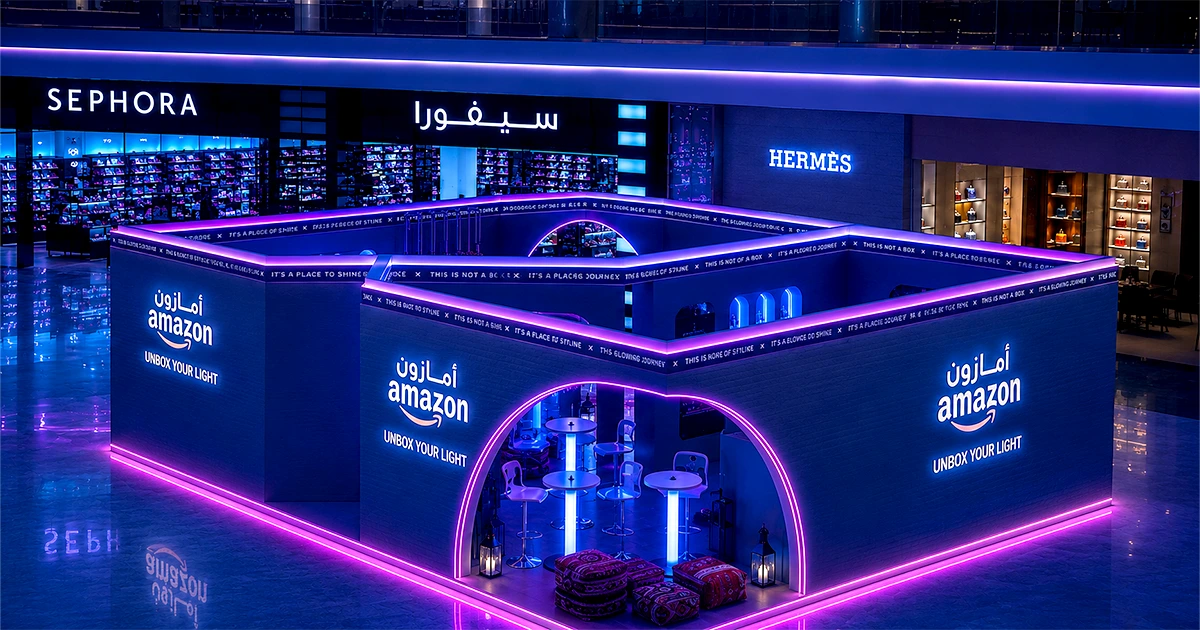
Concept design and stand building are two different services, even though they're often sold and discussed as one. Concept design determines what the exhibition experience should achieve for your brand. Stand building focuses on how that vision gets physically delivered on the exhibition floor.
Confusing the two is one of the most common and most costly mistakes businesses make when planning an exhibition. Hiring a builder before a strategy exists, or assuming design and construction are the same skill set, usually results in a stand that looks fine but doesn't perform.
This guide breaks down what each service actually involves, why the order they happen in matters, and how to evaluate an exhibition partner in Saudi Arabia based on both capabilities.
Exhibition concept design is the strategic and creative process that defines the purpose, story, and visitor experience of an exhibition stand before any construction begins.
It answers the questions that determine whether a stand will actually work, not just whether it will look good in a render.
Concept design typically includes:
Concept design happens before production begins. It's the phase where mistakes are cheapest to fix, because nothing has been fabricated yet.
Stand building is the physical execution phase of an exhibition project, where an approved design is turned into a real, structurally sound stand on the exhibition floor.
Stand building typically includes:
Stand builders execute an approved design. They don't typically develop the exhibition strategy, define the visitor journey, or shape the brand story. Their expertise is in construction, not in deciding what should be built and why.
|
Factor |
Concept Design |
Stand Building |
|
Purpose |
Define the exhibition strategy and visitor experience |
Physically construct the approved design |
|
Focus |
Objectives, storytelling, audience, brand |
Fabrication, engineering, logistics |
|
Deliverables |
Concept boards, 3D visuals, floor plans, journey maps |
Built structure, graphics, installed stand |
|
Team involved |
Strategists, designers, creative directors |
Fabricators, engineers, site crews |
|
Timeline |
Early phase, before production |
Later phase, after design approval |
|
Success metrics |
Visitor engagement, lead quality, brand recall |
Structural safety, on-time installation, build quality |
|
Typical output |
A validated creative direction and plan |
A physical, exhibition-ready stand |
Concept design exists to make sure the stand achieves something specific for the business. Stand building exists to make sure that concept becomes a safe, functional, physical reality on the floor.
Concept design focuses on decisions: who the audience is, what story needs to be told, and how visitors should move through the space. Stand building focuses on execution: materials, structural loads, printing specifications, and installation timelines.
A concept design phase typically produces mood boards, 3D renders, floor plans, and a visitor journey map. A stand building phase produces the physical stand itself, along with technical drawings, manufacturing specs, and installation schedules.
Concept design is led by strategists, exhibition designers, and creative directors who understand marketing and brand objectives. Stand building is led by fabricators, structural engineers, and site crews who understand construction and venue compliance.
Concept design happens first. It shapes every downstream decision. Stand building happens after a design has been approved, and its timeline is driven by fabrication lead times and installation windows rather than creative iteration.
Concept design is measured by whether the stand achieves its business objective: engagement, lead quality, or brand recall. Stand building is measured by whether the stand was constructed safely, on time, and to specification.
Concept design produces a validated plan for what the stand should be and why. Stand building produces the stand itself, ready to receive visitors.
Concept design determines whether an exhibition stand actually works, before a single panel is fabricated. Skipping it, or treating it as a formality, is one of the fastest ways to waste an exhibition budget.
Strong concept design helps organizations:
For example, a stand designed without a visitor journey in mind often ends up with a beautiful entrance and an empty back corner, because there was no strategic reason for people to walk further in. A stand designed around a journey pulls visitors through deliberately, from first impression to product demonstration to conversation.
Even experienced organizations make avoidable mistakes when planning an exhibition stand. The most common include:
Most of these mistakes share a common cause: skipping or rushing the concept design phase in favor of moving straight to construction.
A well-run exhibition project follows a clear sequence, where each stage depends on the one before it.
Business objectives → Research → Concept Design → 3D Visualization → Technical Drawings → Manufacturing → Printing → Installation → Event Support → Dismantling → Post-event Evaluation
Each stage exists for a reason:
Skipping or compressing any of these stages increases risk, either in the form of a weaker visitor experience or a construction problem that surfaces too late to fix cheaply.
A stand builder alone is often sufficient when the design work has already been done or doesn't need to be reinvented.
This applies to situations such as:
In these cases, paying for a full concept design process again would be unnecessary. A capable stand builder can execute efficiently without needing to revisit the underlying strategy.
A full-service exhibition partner, one that handles both concept design and stand building, becomes valuable when the stakes, complexity, or novelty of the project increase.
This applies to situations such as:
Combining concept design, fabrication, technology, and event management under one team reduces project risk. Decisions made during design are informed by what's actually buildable, and decisions made during construction stay aligned with the original strategic intent. When these functions sit in separate companies, that alignment often breaks down somewhere in the handoff.
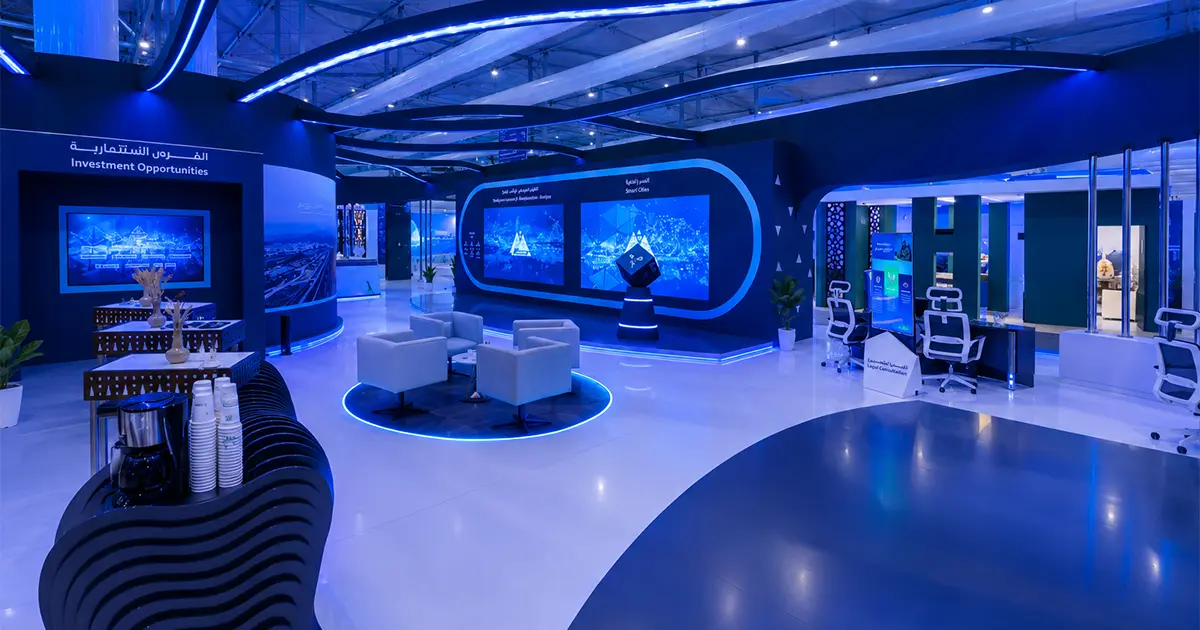
The Hail Region Municipality's exhibition presence at Cityscape Global 2024 is a practical example of why concept design has to come before construction.
The project began with understanding the municipality's development story, including what needed to be communicated to investors and government stakeholders, and how a broad audience would realistically engage with that information on a busy exhibition floor. Only after that strategic groundwork was in place did the project move into booth design and production. See the full [Exhibition Booth Design Case Study: Hail Region Municipality at Cityscape Global 2024] for more detail on how that stand was built.)
Starting with the story rather than the structure is what allowed the final stand to communicate a complex set of initiatives clearly, instead of overwhelming visitors with information that had no clear entry point.
Working with a single partner that handles both concept design and stand building offers practical advantages over splitting the work across separate vendors.
These include:
None of this guarantees a better outcome automatically. A turnkey partner still needs genuine strategic and construction capability on both sides. But when that capability exists within one team, the coordination overhead that often causes delays and miscommunication is significantly reduced.
Concept design and stand building are related but distinct disciplines. Concept design defines what an exhibition stand needs to achieve and how visitors should experience it. Stand building turns that plan into a safe, functional, physical structure.
Businesses evaluating exhibition partners in Saudi Arabia should look beyond construction capability alone. A partner who can build well but can't design strategically will deliver a stand that looks acceptable but underperforms. A partner who can do both, concept development and construction, is better positioned to deliver a stand that actually works for the business objective behind it.
MIX Events delivers concept development, exhibition design, manufacturing, and event management as an integrated service across Saudi Arabia, so the strategic thinking behind a stand and the construction that brings it to life stay connected from the first meeting through dismantling.
Planning an exhibition in Saudi Arabia? Speak with MIX about your project.
What is exhibition concept design?
Exhibition concept design is the strategic and creative process that defines an exhibition stand's purpose, story, and visitor experience before construction begins. It covers business objectives, audience understanding, space planning, and branding.
What is the difference between concept design and stand building?
Concept design determines what the exhibition experience should achieve and how it should feel. Stand building is the physical execution of that design, including fabrication, structural engineering, and installation.
Do I need both services?
Most organizations benefit from both, especially for new stands, product launches, or unfamiliar markets. Businesses reusing an existing, proven design may only need stand building.
What does a stand builder do?
A stand builder executes an approved design, handling fabrication, structural engineering, manufacturing, printing, installation, and dismantling. They typically don't develop the exhibition strategy or visitor journey.
Can one company handle concept design and construction?
Yes. Full-service exhibition partners handle both, which reduces coordination risk and keeps the original strategic vision intact from design through installation.
Why is visitor flow important in exhibition design?
Visitor flow determines whether people move through a stand the way it was intended, engaging with key messages and interaction points rather than walking past them. Poor flow wastes space and reduces engagement, regardless of how the stand looks.
How long does concept design take?
Timelines vary based on project scale and complexity, but concept design typically needs enough lead time to complete research, develop a visitor journey, and produce 3D visualizations before technical drawings and fabrication can begin.
How much does exhibition concept design cost?
Cost depends on stand size, complexity, interactive elements, and technology requirements. It's best evaluated as part of the overall exhibition budget rather than as a separate, isolated line item.
Can an existing exhibition stand be redesigned?
Yes. Existing stands can often be refreshed or reconfigured, particularly modular systems, which can reduce both cost and lead time compared to developing a stand from scratch.
.png )
.png )
.png )
.png )
.png )