.png )
Choosing the right exhibition stand design company in Saudi Arabia means evaluating more than creative designs. The best partners combine concept development, in-house manufacturing, project management, local Saudi experience, and on-site execution to deliver an exhibition stand that supports your business goals. This guide explains the key factors to compare before selecting a company for your next exhibition.
The right exhibition stand design company can shape how your brand is remembered, how many qualified leads you walk away with, and whether your exhibition budget turns into real ROI. Saudi Arabia's exhibition calendar has grown fast. Cityscape Global, LEAP, Big 5 Construct Saudi, and Saudi Build now draw international investors, developers, and government entities in the same halls.
That means your booth is competing with dozens of other brands for the same few seconds of attention. This growth has also widened the field of companies offering exhibition services. Some are genuine design and build partners with in-house manufacturing and project management. Others are brokers who outsource most of the work and add a markup in between. Telling the two apart before you sign a contract is what this guide is for. Picking a partner based on price alone is where most exhibition budgets go wrong. This guide walks through what an exhibition stand design company actually does, what separates a strong partner from a risky one, and what questions to ask before you commit.
An exhibition stand design company plans, builds, and manages the physical and digital experience of your booth, from the first concept sketch through installation and dismantling.
That typically covers concept development, 3D visualization, structural design, manufacturing, on-site installation, and often interactive technology like touchscreens or apps. A full-service company also handles logistics and project management, so you are not coordinating five different vendors on your own.
It helps to understand the difference between three roles that often get lumped together.
Exhibition stand designer: Focuses on the creative side. Concepts, 3D renders, visitor flow, and brand storytelling.
Stand builder (contractor): Focuses on execution. Manufacturing, structural work, and physical assembly on-site.
Exhibition contractor: Usually refers to a company managing the full production chain, including design, build, logistics, and sometimes event management and hospitality.
Some companies only do one of these. Others handle all three under one roof. If you're unfamiliar with how exhibition services fit into the wider events industry, our guide on what an event management company actually does explains the different roles involved in planning and delivering business events. Knowing which type of company you are talking to changes how you evaluate their proposal.
|
Role |
Main Focus |
What They Typically Deliver |
|
Exhibition stand designer |
Creative and strategic |
Concepts, 3D renders, visitor flow, brand storytelling |
|
Stand builder (contractor) |
Physical execution |
Manufacturing, structural work, on-site assembly |
|
Turnkey exhibition partner |
Full production chain |
Design, build, technology, logistics, hospitality, and event management under one team |
If a proposal only covers one column of that table, you will likely need to hire, brief, and manage a second or third vendor yourself.
A weak exhibition partner rarely fails in an obvious way. It fails in small operational gaps that add up.
Poor visitor flow means people walk past your booth instead of into it. Construction delays mean your stand is still being finished when doors open. Hidden costs mean the quote you approved is not the invoice you receive. Inconsistent branding means your booth looks nothing like your website or your last campaign. Technical failures- a screen that will not connect or a login that will not load- happen in front of the exact investors you were trying to impress.
None of these are rare. They are the most common reasons exhibition projects underperform, and almost all of them trace back to the company managing the build, not the concept itself.
Ask how long the company has operated in Saudi Arabia specifically, not just internationally. Local experience matters more than global reach when you are dealing with venue rules, government approvals, and Saudi supplier networks.
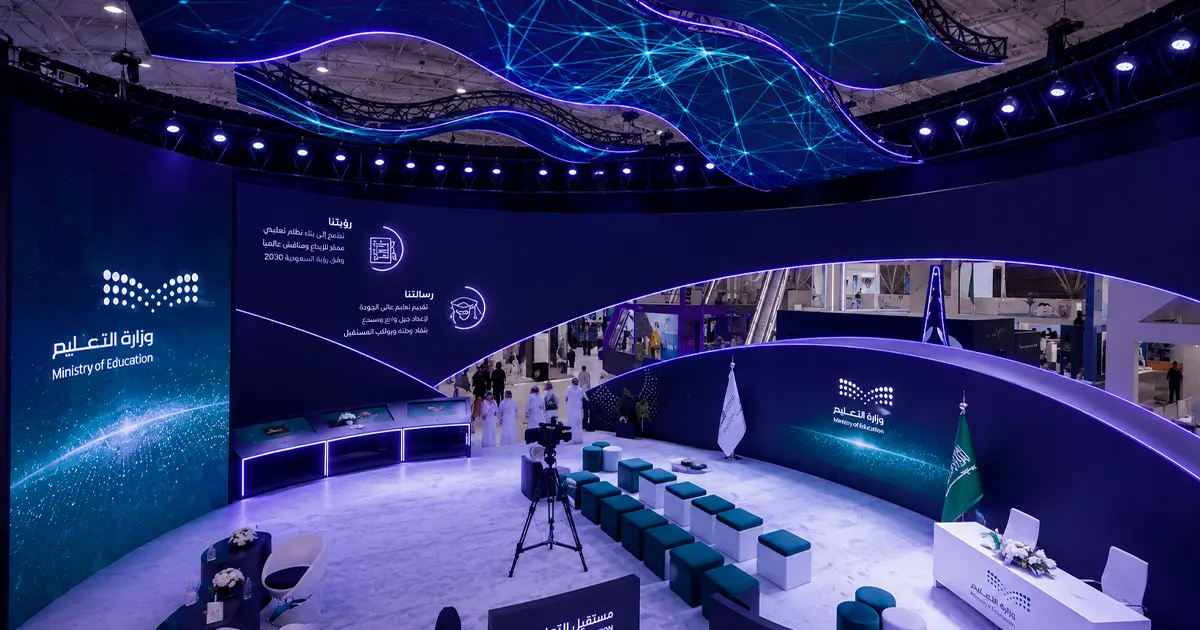
Look at their portfolio for relevant work. A company that has delivered government exhibitions, like ministry pavilions or municipal projects, understands a different set of approval processes and stakeholder expectations than one that has only worked corporate retail activations.
Strong design goes beyond an attractive render. Ask how the company approaches brand storytelling and visitor flow, not just visual style.
A good design team can explain why a visitor enters from one direction, why an interactive screen sits at a specific point in the layout, and how the space guides someone from curiosity to conversation. If a company can only show you pretty images with no reasoning behind the layout, that is worth noting.
Ask what materials they use, whether the structure is built for reuse across multiple events, and what safety standards they follow.
Modular systems that can be reconfigured for different booth sizes save money over multiple exhibitions. A company that manufactures in-house also has more control over quality and timelines than one outsourcing production to a third party.
A booth is only as good as the team coordinating it. Ask who manages your project day to day, how often you will get updates, and who is physically on-site during installation.
Clear timelines and a single point of contact reduce the back-and-forth that causes delays. If a company cannot describe their project management process clearly before you sign, that is a preview of what working with them will feel like.
Ask specifically how they handle last-minute changes. Exhibitions rarely go exactly to plan, whether it is a late brand update, a venue restriction that surfaces during setup, or a VIP attendee list that changes the day before. A team with a clear escalation process will absorb these changes without derailing the timeline. A team without one will pass the stress straight to you.
LED walls, touchscreens, interactive displays, digital registration, AR or VR experiences, and custom mobile applications have become standard expectations at major Saudi exhibitions, not add-ons.
Ask for examples of technology they have integrated before, not just a list of capabilities. There is a real difference between a company that has installed interactive touchpoints on live projects and one that is offering it for the first time on yours.
Design, production, printing, transportation, installation, hospitality, and event management are all separate moving parts. When one company handles all of them, you get one point of accountability instead of five contracts to manage.
This matters most for government and high-profile corporate exhibitions, where VIP hospitality and on-site coordination are as important as the physical build.
A quotation that looks unusually cheap compared to competitors is often missing something, whether that is manufacturing quality, project management time, or on-site support.
Watch for a company that cannot name a dedicated project manager for your exhibition, has no visible history working in Saudi Arabia, or is vague about pricing until late in the process. Poor communication during the sales stage is a strong predictor of poor communication once you are under a deadline.
A lack of safety compliance documentation, no real project portfolio, and generic designs that could belong to any brand are all signs the company is optimizing for volume rather than quality.
Exhibition stand design is the strategic and creative phase: concept, layout, visitor flow, and brand storytelling. Stand building is the execution phase: manufacturing, structural assembly, and physical installation.
Design without strong building execution results in a booth that looks great on paper but has structural or logistical problems on-site. Building without strong design execution results in a technically solid booth that fails to attract or engage visitors.
Both are necessary, and both need to be handled by people who understand how the other phase works. This is why many businesses now look for a single exhibition partner rather than splitting design and construction across two separate vendors.
Exhibition venues in Saudi Arabia operate under specific regulations around structure height, materials, and safety compliance that vary by venue and by city.
A company with local experience already understands these rules, has existing relationships with approved suppliers, and knows how to navigate government approval processes without last-minute surprises. Arabic-speaking teams also matter when you are coordinating with venue staff, government stakeholders, or local suppliers under time pressure.
With Vision 2030 driving a steady increase in major exhibitions and government-backed events across the Kingdom, working with a partner who understands the local landscape is no longer optional for anyone exhibiting at scale. This reflects the broader growth of Saudi Arabia's event management industry, where international exhibitions, conferences, and live events continue to expand alongside Vision 2030 initiatives.
This becomes even more important for government-facing projects. Municipal and ministry exhibitions often involve additional layers of stakeholder approval, brand guidelines, and content review that a company without government experience will not anticipate. A partner who has already navigated that process knows where the delays typically happen and how to plan around them, instead of discovering the friction points during your event week.
When one company manages design, production, logistics, installation, event management and entertainment services, and hospitality, you remove the coordination gaps that usually cause problems.
There is no handoff between a design agency and a separate construction contractor where details get lost. There is one team accountable for the timeline, one team responsible for quality, and one point of contact if something needs to change on short notice. For government and high-profile corporate exhibitions in particular, this reduces the operational risk that comes with juggling multiple vendors under a fixed event date.
It also changes how problems get solved. When design and build sit inside the same company, a structural constraint discovered during manufacturing can be fed back into the design immediately, instead of triggering a round of emails between two separate vendors while the deadline gets closer. The same applies to hospitality. A team that already knows the booth layout can plan VIP flow and guest management around it, rather than treating hospitality as a separate service bolted on at the end.
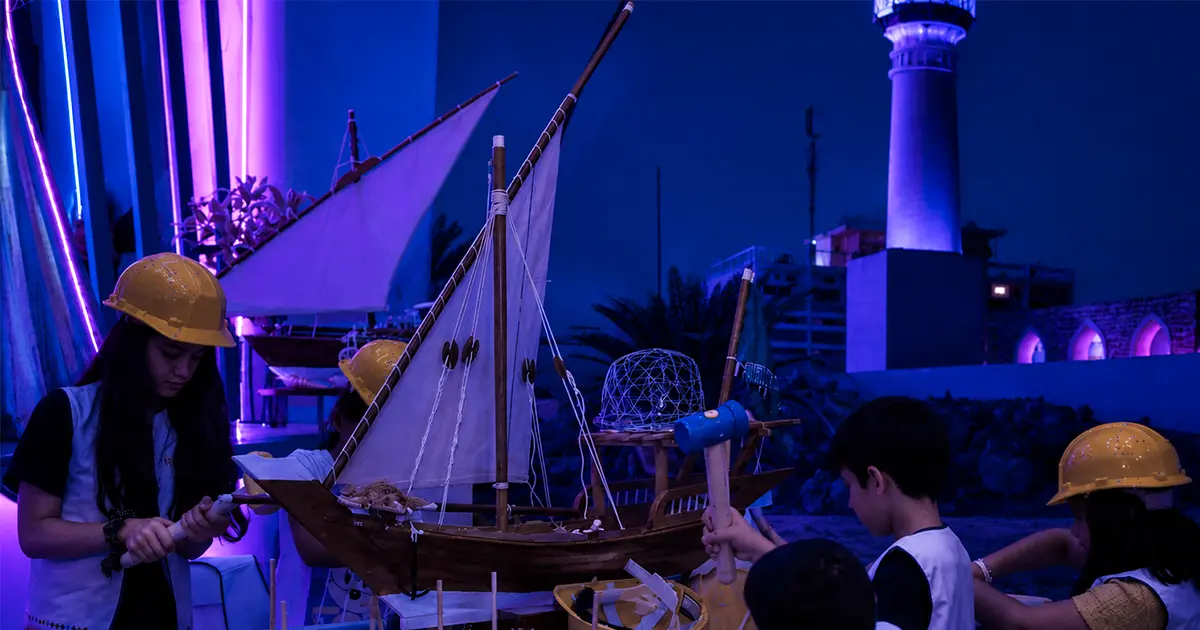
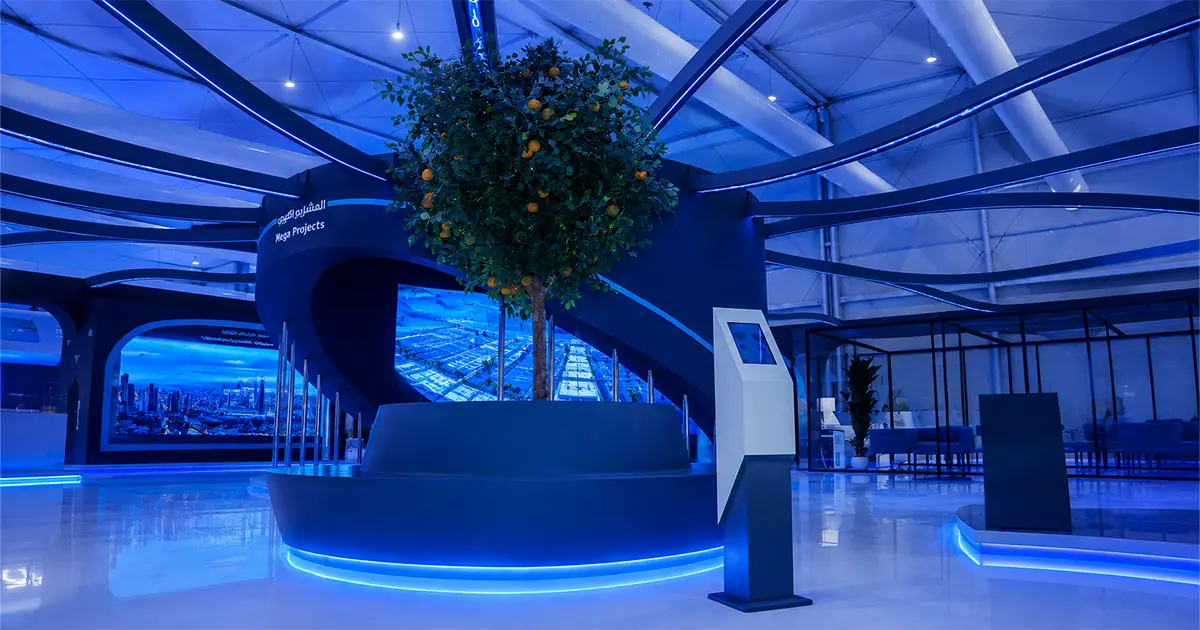
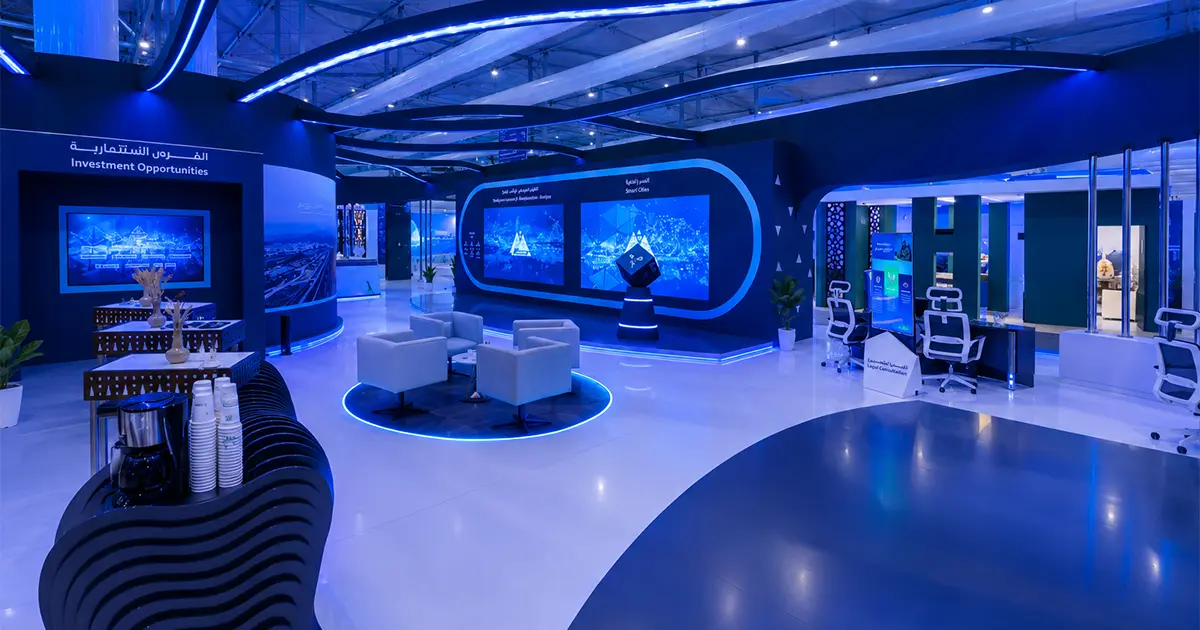
MIX delivered a full exhibition stand for Hail Region Municipality at Cityscape Global 2024 in Malham, Riyadh, built around the region's Mega Projects.
The challenge was scale. Hail's Mega Projects span vast geography and multiple long-term development plans, and none of that fits naturally into a standard booth footprint. MIX had to compress an entire regional vision into a pavilion visitors could understand in a single walkthrough.
The approach started with the municipality's own identity rather than a generic template, then layered structural production with interactive digital touchpoints so visitors could explore Hail's master plans at their own pace. MIX handled the full production chain in-house, from manufacturing and booth assembly to VIP hospitality.
The result was an exhibition experience that attracted strong visitor interest throughout the show and positioned Hail's mega projects for the investment conversations they were built to start. It is a practical example of how design, build, and hospitality working under one team translates into a smoother exhibition outcome.
Businesses and government entities choose MIX's Exhibitions & Concept Design services because the team manages exhibition projects end-to-end, from first concept through the last day of dismantling, rather than handing off between separate vendors for design, production, and on-site execution.
That includes experience delivering government and municipal exhibitions, where approval processes and stakeholder expectations differ from standard corporate activations. It includes in-house manufacturing and project coordination, which keeps timelines and quality under one team's control. And it includes building interactive, technology-driven experiences that go beyond a static structure, which matters as exhibitions across Saudi Arabia continue to raise the bar on what visitors expect.
Choosing an exhibition stand design company is not just a creative decision. It is an operational one that affects your budget, your timeline, and how your brand is perceived by the exact investors, partners, or customers you are trying to reach.
Look past the render and ask about experience, local knowledge, manufacturing quality, and how the company manages a project from concept to closing day. A partner who can handle design, build, technology, and hospitality under one roof removes the coordination risk that causes most exhibition problems.
If you are preparing for Cityscape Global, LEAP, Big 5 Construct Saudi, or any major exhibition in the Kingdom, evaluate your exhibition partner with the same rigor you would apply to any other business decision at that scale.
If you're planning an upcoming exhibition, explore our Exhibitions & Concept Design services or contact MIX Events to discuss your project with our team.
What does an exhibition stand design company do?
An exhibition stand design company plans, designs, manufactures, and installs booths for trade shows and exhibitions, often including interactive technology, project management, and on-site logistics as part of the service.
How much does exhibition stand design cost in Saudi Arabia?
Cost depends on booth size, materials, technology integration, and whether the project includes full turnkey services like hospitality and event management. Custom builds generally cost more than modular systems, but modular stands can be reused across multiple events, which lowers cost per exhibition over time.
How long does it take to build an exhibition stand?
A full turnkey exhibition project, from concept design through manufacturing and on-site build, typically takes several weeks to a few months, depending on the size and complexity of the stand.
What is the difference between stand design and stand construction?
Stand design is the strategic and creative phase covering concept, layout, and visitor flow. Stand construction is the execution phase covering manufacturing, structural assembly, and physical installation. Both need to work together for the final result to succeed.
Can one company manage both design and execution?
Yes. Full-service exhibition companies manage design, manufacturing, logistics, installation, and often event management and hospitality under one team, which reduces coordination gaps compared to using separate vendors for each phase.
Why is exhibition booth design important?
Exhibition booth design directly affects visitor engagement, brand perception, and lead generation at an event. A well-designed booth communicates a complex message quickly and gives visitors a reason to stop and engage rather than walk past.
How do I compare exhibition stand companies?
Compare portfolios for relevant experience, ask about local Saudi experience and government project history, request references, and evaluate how clearly each company explains their project management process before you sign a contract.
What should I ask before hiring an exhibition contractor?
Ask to see similar past projects, who manages on-site installation, whether manufacturing is done in-house, how design changes are handled, who manages logistics, and whether the booth structure can be reused for future events.
.png )
.png )
.png )
.png )