
The right event format is the one that matches your business objective, not the one that looks most impressive on paper. If your goal is generating qualified leads, an exhibition usually outperforms a conference. If your goal is building thought leadership, a conference usually outperforms a live event. Choosing the wrong format wastes budget, disengages your audience, and produces an event that looks good but delivers little.
This guide breaks down how conferences, exhibitions, and live events differ, when each one makes sense, and how to decide based on what your organization actually needs to achieve. It's written for the teams in Saudi Arabia who are evaluating their options before they bring in an event management company, not after.
An event format is the structural approach used to deliver a specific business outcome. It defines how attendees interact with your content, your brand, and each other.
The same budget can produce very different results depending on the format chosen. A SAR 500,000 conference and a SAR 500,000 exhibition serve completely different purposes, attract different attendees, and generate different types of return.
Common corporate event formats include:
Each format has a different rhythm, a different attendee expectation, and a different measurement of success. Choosing between them starts with understanding what you're actually trying to accomplish.
The format you choose determines what your event can realistically achieve. An event objective that isn't matched to the right format will underperform, regardless of production quality or budget size.
Here's how format connects to outcome:
Audience engagement. Conferences engage attendees through content and discussion. Live events engage through experience and emotion. Exhibitions engage through direct, hands-on interaction.
Lead generation. Exhibitions are built for this. Booths, product demos, and face-to-face conversations create qualified leads at a pace conferences rarely match.
Networking. All three formats support networking, but the quality differs. Conferences produce structured networking around shared topics. Exhibitions produce high-volume networking across a trade floor. Live events produce relationship-building in a relaxed, social setting.
Education. Conferences are the strongest format for transferring knowledge, training teams, or establishing subject-matter authority.
Product awareness. Exhibitions and product launches are built for this. They put your product in front of buyers, media, and decision-makers in a tangible way.
Employee engagement. Live events, particularly galas and brand activations, do the heaviest lifting here. They build morale and reinforce culture in ways a conference agenda cannot.
Brand positioning. Every format contributes to brand positioning, but the mechanism is different. Conferences position you as an authority. Exhibitions position you as a visible market player. Live events position you as a brand people want to be associated with.
If you skip this step and choose a format because it's trending, or because a competitor did something similar, you risk building the wrong event around the right budget.
Here's a direct comparison across the factors that matter most when planning a corporate or government event in Saudi Arabia.
|
Factor |
Conference |
Exhibition |
Live Event |
|
Primary objective |
Education, thought leadership |
Lead generation, product visibility |
Engagement, brand experience |
|
Typical audience |
Industry professionals, executives |
Buyers, investors, media, public |
Employees, clients, VIPs |
|
Best use cases |
Forums, seminars, training, government briefings |
Trade shows, product demos, government project showcases |
Galas, launches, brand activations, awards |
|
Budget considerations |
Moderate to high (speakers, AV, content) |
High (booth design, stand build, staffing) |
Moderate to high (production, entertainment, catering) |
|
Engagement level |
Moderate (passive to active) |
High (hands-on interaction) |
Very high (experiential) |
|
Lead generation potential |
Moderate |
Very high |
Low to moderate |
|
Brand awareness |
High among niche audience |
High among broad audience |
High emotional impact |
|
Networking opportunities |
Structured, topic-based |
High-volume, transactional |
Relaxed, relationship-based |
|
Typical duration |
1–3 days |
2–5 days |
Single evening or day |
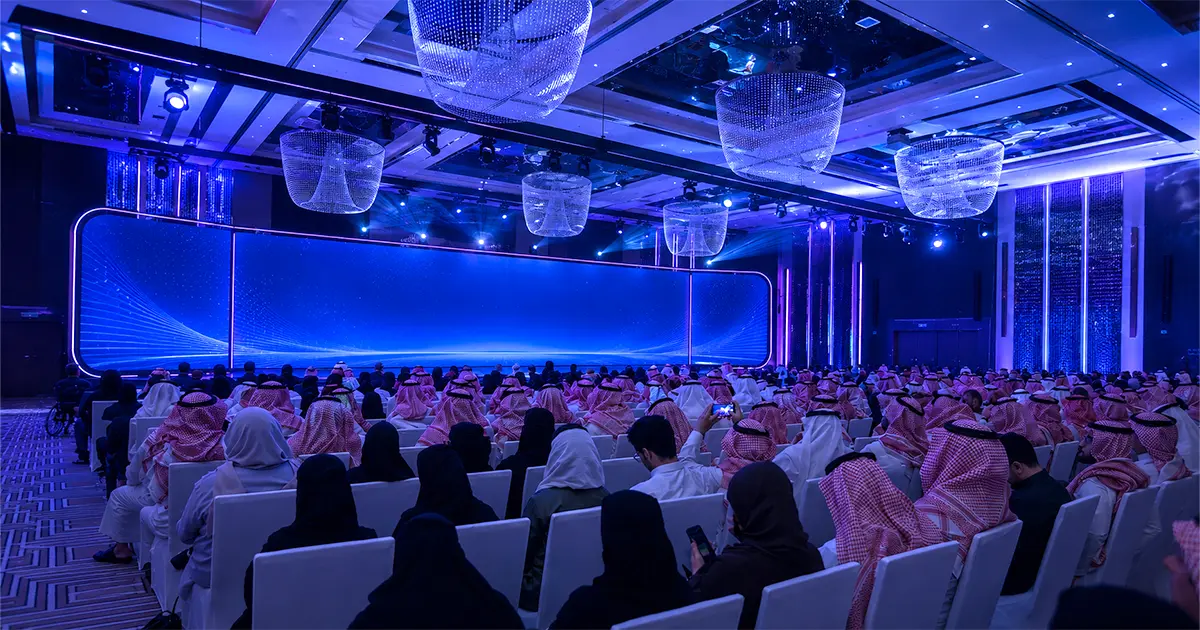
Conference and forum services center on structured content delivery. Attendees come to learn from experts, hear industry direction, or receive training. The format works because it gives an organization a controlled environment to demonstrate authority.
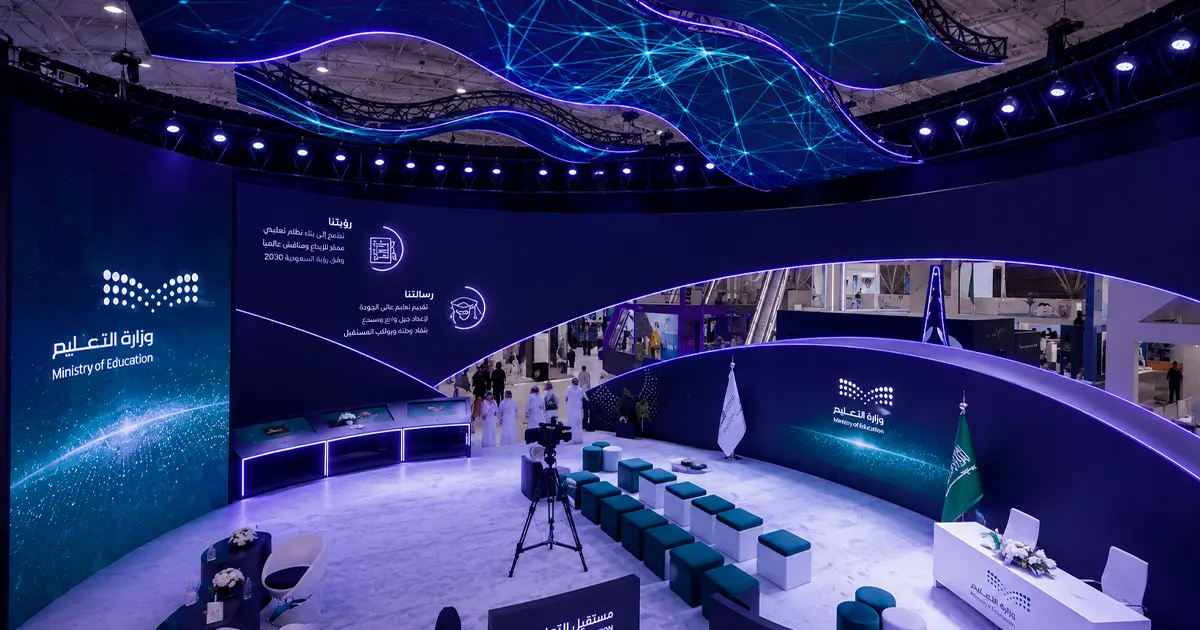
Exhibitions center on direct interaction. Attendees walk a floor, stop at booths, and engage with representatives face-to-face. This format converts interest into leads faster than almost any other corporate event type, because the buyer is physically present and actively evaluating options.
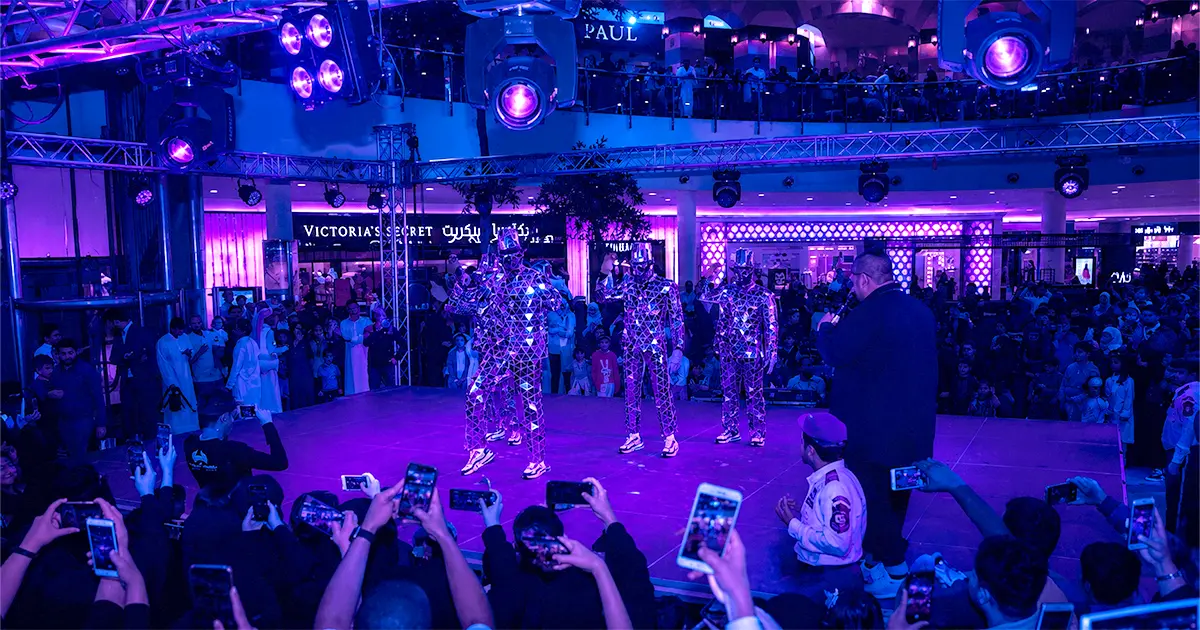
Entertainment and live events center on experience. There's less agenda and more atmosphere. The success metric isn't information transfer, it's emotional impact and the strength of the connection people feel with your brand afterward.
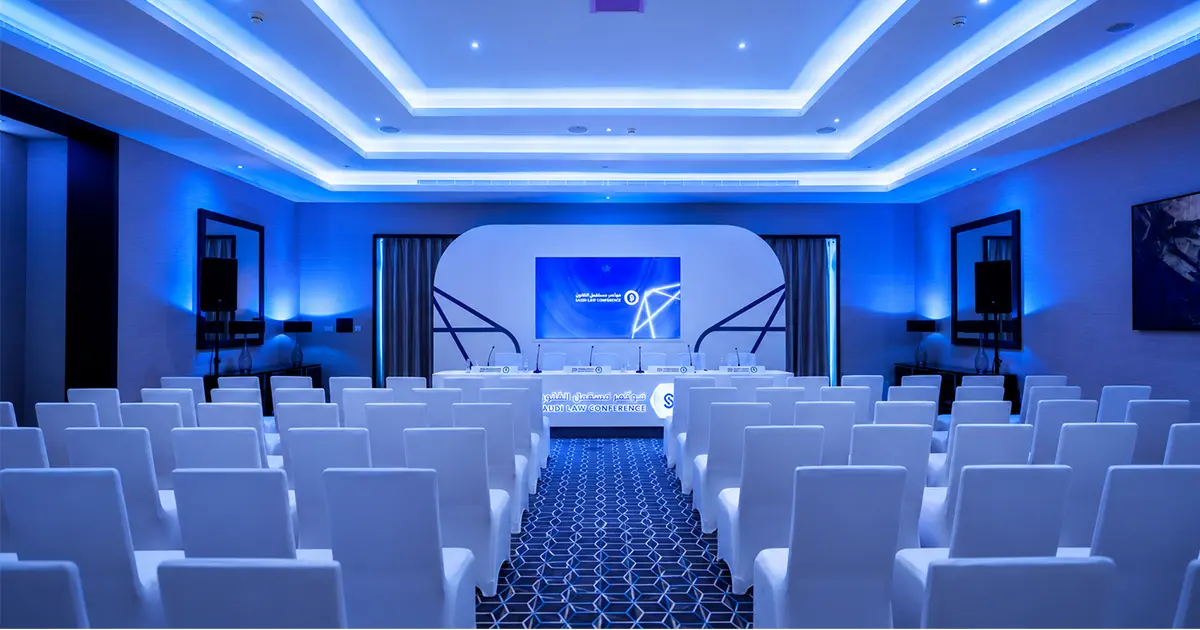
A conference is the right format when your primary goal is to educate an audience, establish authority, or bring a specific community together around shared knowledge.
Conferences work well for:
Conferences benefit organizations that have genuine expertise to share and want to be recognized as a reference point in their field. Government entities, professional associations, and B2B companies with complex offerings tend to get the most value from this format, because a conference gives them room to explain nuance that a trade floor conversation can't.
If your goal is to change how your industry perceives your organization, a conference gives you the platform to do that in a credible, content-first way.
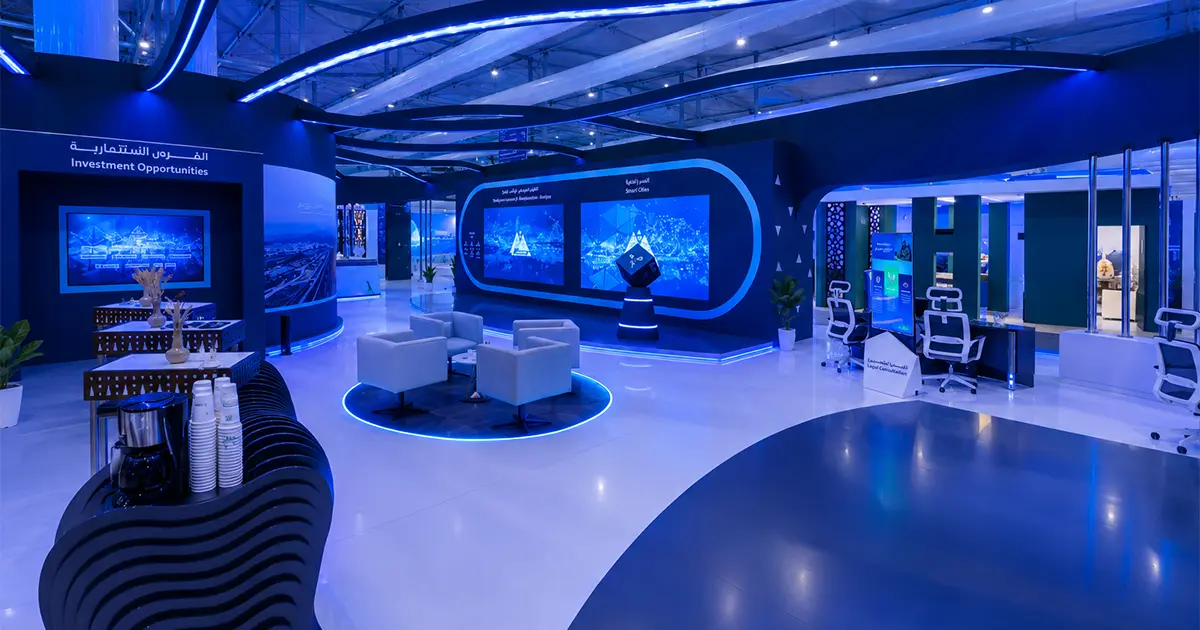
An exhibition is the right format when your primary goal is generating leads, demonstrating a product, or achieving high-volume visibility with buyers, investors, or the public.
Exhibitions work well for:
Exhibition success depends heavily on execution. A well-designed booth draws attendees in and holds their attention. A poorly designed one gets walked past. Booth design and visitor experience aren't secondary details; they're often the deciding factor in whether an exhibition delivers a return on investment.
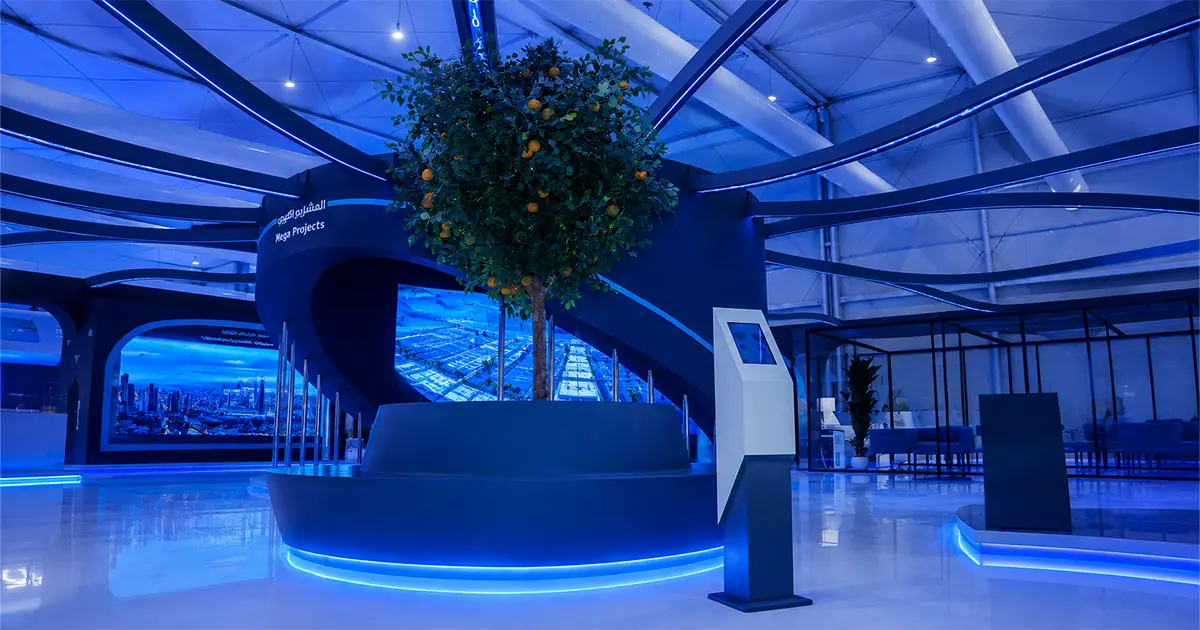
We saw this firsthand while designing the exhibition presence for the Hail Region Municipality at Cityscape Global 2024, where the booth had to communicate a complex set of development initiatives to a broad, fast-moving audience of investors and government stakeholders. See the full [Exhibition Booth Design Case Study: Hail Region Municipality at Cityscape Global 2024] for how that stand was designed to hold attention and simplify a complicated message.)
If your objective is measurable engagement with buyers or stakeholders in a compressed timeframe, an exhibition is usually the stronger choice over a conference.
A live event is the right format when your primary goal is creating an experience that builds emotional connection, whether that's with employees, clients, or the public.
Live events work well for:
Immersive experiences outperform traditional formats when the goal is memorability rather than information transfer. A gala dinner won't teach your audience anything new, but it will shape how they feel about your organization, and that feeling often influences future business decisions more than a well-delivered presentation does.
Live events also tend to have the shortest attention window and the highest production expectations. Attendees at a gala or launch expect polish, pacing, and atmosphere. There's less room for a flat moment than there is at a conference, where content can carry a quieter stretch.
The fastest way to choose a format is to start from your goal, not from the format itself.
|
Business Goal |
Recommended Event Format |
|
Generate B2B leads |
Exhibition |
|
Educate customers or partners |
Conference |
|
Launch a product |
Live Event |
|
Increase employee engagement |
Live Event |
|
Showcase government projects |
Exhibition |
|
Strengthen industry leadership |
Conference |
|
Attract investors |
Exhibition |
|
Recognize performance or achievement |
Live Event |
|
Train an internal or external audience |
Conference |
Use this table as a starting point, then stress-test it against your specific audience, timeline, and budget. A government entity showcasing infrastructure progress will usually get more value from an exhibition floor than a lecture hall, because the message benefits from visuals, models, and direct conversation. A professional services firm trying to build credibility will usually get more value from a conference, because trust is built through demonstrated expertise, not a booth.
Yes. Hybrid formats are increasingly common in Saudi Arabia's corporate and government event landscape, and they often deliver stronger outcomes than a single format alone.
Common combinations include:
Integrated events tend to outperform single-format events because they capture more of the attendee journey. A conference alone educates. An exhibition alone converts. Combined, they educate and convert within the same event window, which is often more efficient than running two separate events months apart.
The tradeoff is complexity. Hybrid formats require more careful planning around attendee flow, timing, and venue logistics. This is usually where organizations benefit most from working with an experienced partner rather than managing the integration internally.
Even well-resourced organizations get event format selection wrong. The most common mistakes we see include:
Most of these mistakes trace back to the same root cause: starting the planning process with logistics instead of objectives.
A strong event management partner does more than execute logistics. The value shows up earlier, in the decisions that shape whether the event succeeds before a single chair is set up.
That includes:
This is the difference between an event executor and a strategic partner. An executor builds what you ask for. A strategic partner helps you decide what to ask for in the first place, based on what will actually move your business forward.
The Hail Region Municipality's presence at Cityscape Global 2024 is a useful example of format selection done well. The municipality needed to communicate a wide range of development initiatives to investors, government stakeholders, and the public in a single event window.
A conference format would have limited the audience to those willing to sit through structured sessions. Instead, an exhibition format was chosen, allowing visitors to move through the space, engage directly with project representatives, and absorb information at their own pace. The booth design played a central role in making a complex set of initiatives easy to understand quickly, which is exactly the kind of decision that separates an effective exhibition from a forgettable one.
Choosing between a conference, exhibition, and live event isn't about which format is more impressive. It's about which format is built to deliver the outcome your organization actually needs.
Start with your business objective. If it's education and authority, look at a conference. If it's leads and visibility, look at an exhibition. If it's engagement and experience, look at a live event. If your goals span more than one of these, a hybrid approach may serve you better than picking just one.
Trends change. Business objectives don't move nearly as fast. An event built around a clear objective will outperform one built around what looked good at last year's industry gathering.
MIX Events works with organizations across Saudi Arabia to select, design, and deliver the event format that actually fits their goals, not just their budget. If you're weighing your options before committing to a format, that's exactly the conversation worth having before you start planning.
What is the best event format for B2B companies?
There's no single best format. B2B companies generating leads typically benefit most from exhibitions, while those building industry authority typically benefit more from conferences. The right choice depends on the specific objective for that event.
What is the difference between a conference and an exhibition?
A conference is built around structured content delivery, such as speakers and panels, aimed at educating an audience. An exhibition is built around direct interaction, such as booths and product demos, aimed at generating leads and visibility.
When should a company organize a live event?
A live event makes sense when the primary goal is building an emotional connection with an audience, such as employee engagement, brand activations, product launches, or recognition events like galas and award ceremonies.
Can conferences include exhibitions?
Yes. Combining a conference with an exhibition is a common hybrid format, allowing attendees to gain knowledge through sessions and then engage directly with vendors or solutions on an exhibition floor.
Which event format generates the most leads?
Exhibitions generally generate the highest volume of qualified leads, because they create direct, face-to-face interaction between attendees and representatives in a compressed timeframe.
Which format is best for employee engagement?
Live events, particularly those built around experience and celebration such as galas or brand activations, tend to be the strongest format for building employee engagement and reinforcing company culture.
How do I choose between a conference, exhibition, and live event?
Start by identifying your primary business objective. Match education and authority goals to a conference, lead generation and visibility goals to an exhibition, and engagement or experience goals to a live event. If you have multiple objectives, consider a hybrid format.
Should I hire an event management company before choosing an event format?
It helps. An experienced event management company can stress-test your objectives against realistic budget, venue, and audience considerations before you commit to a format, which reduces the risk of choosing the wrong one.

.png )
.png )

.png )
.png )
.png )