
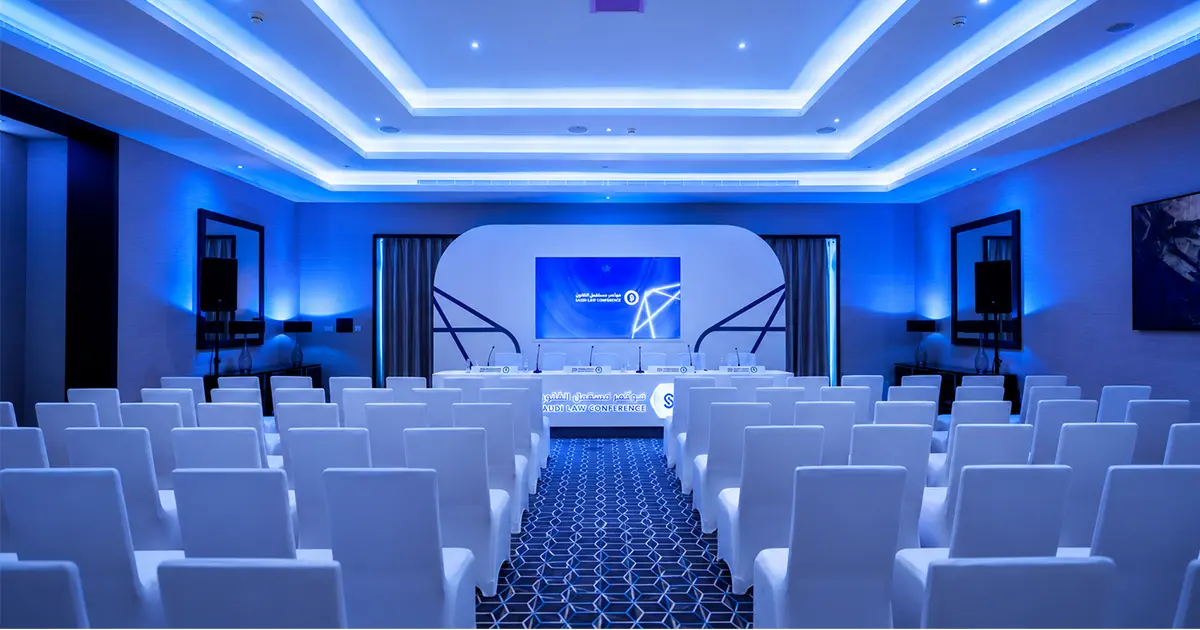
Organizing a government conference in Saudi Arabia takes more than booking a venue and running a professional production. It requires coordinating official protocol, securing the right approvals, managing VIPs and senior officials, planning security and access control, and aligning multiple government stakeholders around one master timeline. A single missed protocol detail or delayed approval can affect the credibility of the entire event, so government event management demands a level of precision that standard corporate events don't require. This guide walks through what organizers need to plan for, in the order it typically needs to happen, from the first brief to event-day execution.
Government conferences differ from corporate events in one core way: the presence of official protocol and institutional accountability. Every decision, from seating order to who greets whom first, reflects on the government entities involved.
Key differences include:
Because of this, small operational mistakes, like a delayed VIP arrival or a wrong seating order, carry more weight at an official event than they would at a corporate conference.
Most execution problems trace back to doing things out of order, not doing them badly. Venues get booked before protocol requirements are known. VIP lists get finalized after the seating plan is locked. Production gets designed before security has flagged restricted zones. A clear sequence prevents this.
In practice, government conference planning tends to move through six phases:
Skipping ahead, for example locking a venue before protocol is confirmed, is one of the most common causes of costly changes later in the process.
Before contacting any venue or supplier, define the essentials:
A clear brief prevents wasted time later, since venue and supplier options narrow considerably once security, capacity, and protocol requirements are known.
Protocol governs how officials are received, seated, and introduced, and it shapes almost every other planning decision. Areas that typically require protocol input include:
Protocol requirements vary by event, entity, and occasion, so they should always be confirmed directly with the relevant government authority or protocol office rather than assumed from past events.
Government events often require sign-off from more than one party, including the hosting entity, the venue, and relevant authorities. What's approved and by whom depends heavily on the specific event, so organizers should:
Because approval processes and requirements can change, it's worth confirming current requirements with the relevant Saudi authority rather than relying on assumptions from a previous event.
Choosing a government conference venue balances protocol needs, security, and practical logistics. It's rarely the cheapest or most photogenic option.
What to evaluate:
A venue that looks impressive but can't support secure VIP movement or reliable connectivity creates problems that surface on event day, when there's no time to fix them.
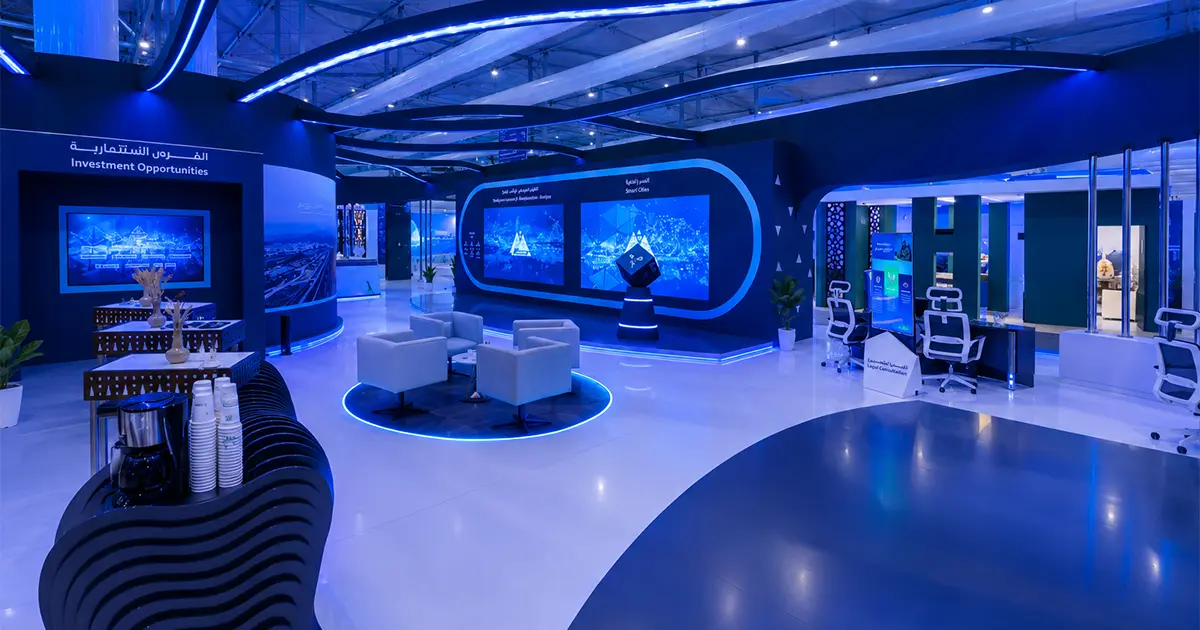
Production at a government conference should reinforce the official tone of the event, not compete with it. This typically covers stage design, LED screens, sound, lighting, presentation and confidence monitor systems, microphones, speaker timers, live streaming, recording, hybrid participation tools, and interpretation systems.
Backup systems matter more here than at a standard event. A microphone failure during a minister's remarks is a very different problem than the same failure at a product launch. Technical rehearsals should happen well before doors open, with every system tested under real conditions.
VIP handling should run as a single coordinated thread from invitation to departure, not a separate task handled on the side. That means planning:
Every VIP movement should sit inside the master event timeline. Treating VIP logistics as a side process is one of the most common sources of delay on event day.
Security coordination needs to start early, well before the event-day run sheet is finalized. Planning should account for guest and staff access levels, accreditation, restricted areas, supplier and equipment deliveries, vehicle access, and emergency procedures. The goal at the planning stage is coordination and clarity of responsibility, not publishing sensitive operational detail.
Registration needs to balance three things at once: security, speed, and professionalism. Pre-registration, digital accreditation, QR-code check-in, and clear badge tiers for VIPs versus general delegates all help reduce queues and keep verification accurate. Help desks and clear wayfinding matter too, especially at multi-hall venues where delegates can easily lose their way between sessions.
Coordinating officials, keynote speakers, panelists, and moderators means confirming biographies, session timings, stage entrances, and technical requirements well in advance. Rehearsals and technical checks should always happen before the event opens, not during a break between sessions. This is especially true when senior officials or international speakers are involved, since their schedules leave little room for last-minute adjustments.
Media accreditation, press areas, and official photography positions should be built into the venue layout and production plan from the start, not added afterward. Planning for interviews, live coverage, and content capture early avoids conflicts with security zones or VIP movement paths later.
A detailed run sheet with a clear responsibility matrix is what keeps a government conference on track. It should cover supplier check-in, venue and technical inspection, security coordination, registration opening, VIP arrival, speaker readiness, stage management, session transitions, catering, media coordination, real-time issue handling, VIP departure, and venue handover. When everyone knows exactly who owns each task, small issues get resolved without disrupting the agenda.
Use this as a final check before the event opens:
Most of these come down to sequencing. Experienced event management reduces this risk by defining requirements before commitments are made, not after.
Government conference budgets don't follow a fixed formula, but the allocation logic behind each cost category is fairly consistent:
Thinking in terms of what drives each category, rather than a single total figure, makes it easier for procurement teams to compare proposals and understand where costs are coming from.
Planning generally moves through these stages, though timelines shift depending on scale and complexity:
These are recommended planning practices, not official regulatory deadlines. Actual approval timelines and requirements should always be confirmed with the relevant government authority.
For complex government conferences involving VIPs, protocol, multiple suppliers, and detailed production, our conference and forum management services can provide significant value. The value isn't in venue setup alone. It's in coordinating protocol, VIP movement, approvals, security, production, and multiple suppliers as one system instead of separate moving parts, which reduces the operational risk that comes from managing all of this internally.
When evaluating an event management company, look for relevant government or institutional experience, a clear understanding of protocol, a reliable supplier network, budget transparency, and a track record of solid on-site execution. Ask how they handle VIP logistics, what their contingency planning looks like, and how they report after the event.
How do you organize a government conference in Saudi Arabia? Start with a clear brief covering objectives, stakeholders, and VIPs, then work through protocol, approvals, venue selection, production, and security planning before finalizing the event-day run sheet.
What is government event protocol in Saudi Arabia? It covers how officials are received, seated, and introduced, including VIP arrival sequencing, speaker order, and formal titles. Requirements should be confirmed with the relevant protocol authority for each event.
What should be considered when planning a government conference? Objectives, stakeholders, VIPs, protocol, approvals, venue requirements, security, production, and budget should all be defined before contacting suppliers.
How do you choose a government conference venue? Evaluate capacity, VIP and breakout rooms, security and access control, AV infrastructure, and proximity to accommodation, not just visual appeal or price.
What are the main requirements for government conference production? Reliable AV, staging, backup systems, and interpretation facilities that support the formal tone of the event, tested through rehearsals before doors open.
How should VIPs be managed at government conferences? As a single coordinated process from invitation to departure, built directly into the master event timeline rather than handled separately.
What approvals may be required for a government event in Saudi Arabia? This varies by event and entity. Identify likely requirements early and confirm them with the relevant government authority rather than assuming.
How much does it cost to organize a government conference? Costs depend on venue scale, production complexity, VIP requirements, and registration technology. Rather than a fixed price, it's more useful to budget by category based on your specific event.
How far in advance should you plan a government conference? As early as possible. Protocol, approvals, and VIP coordination all take time, and rushing these stages is one of the most common causes of execution problems.
Is hiring a government event management company worth it? For complex events involving multiple stakeholders, protocol, and production, yes. Simpler internal meetings may not need the same level of external support.
.png )
.png )



.png )


.png )
.png )